Super App Stories
Super App Stories: How Toss Became South Korea’s Financial Operating System

Editorial Team
•
Boxo
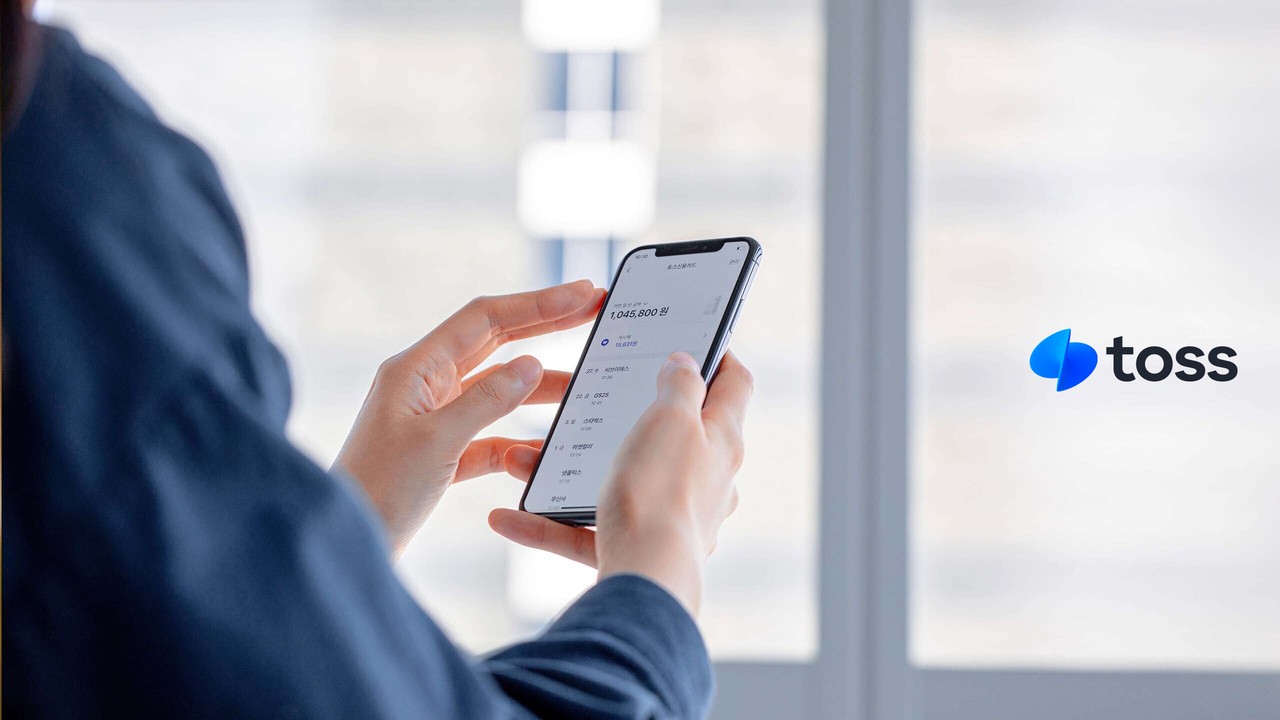
How Toss Became South Korea’s Financial Operating System
What is Toss?
Toss launched in South Korea in 2015 with a deliberately narrow focus: make sending money effortless. At the time, peer-to-peer transfers were weighed down by legacy banking flows, repeated authentication steps, and unintuitive interfaces. Toss removed that friction entirely, allowing users to move money instantly with a few taps.
That clarity of purpose mattered. Today, Toss is valued at 7.1B USD and has amassed over 30 million users — roughly 60% of South Korea’s population. What began as a simple utility has become one of the most deeply embedded consumer platforms in the country, trusted for everyday financial activity.
What did Toss start as?
At its core, Toss was a peer-to-peer transfer utility. It did not attempt to replace banks or offer a wide product suite from day one. Instead, it focused on speed, simplicity, and reliability.
This restraint proved strategic. Money transfers are high-frequency and emotionally neutral. Users do not need to “decide” to send money. They just need it to work. By owning that moment, Toss embedded itself into daily financial behaviour at national scale.
Once users trusted Toss with transfers, adjacent services followed naturally. The app expanded into payments, bill settlement, and account aggregation, giving users a single view of their finances across institutions. What had been a utility began to resemble a financial control panel.
Toss then introduced tools that helped users understand their money, not just move it. Credit score monitoring, financial insights, and personalised recommendations shifted the relationship from transactional to advisory. Users were now opening Toss even when they were not sending money.
The turning point: becoming a bank inside the app
The launch of Toss Bank marked a defining moment. With full digital banking capabilities integrated directly into the app, Toss moved from the edge of the financial system to its centre. Savings, loans, and everyday banking were no longer separate destinations. They lived inside the same interface users already trusted.
From there, the platform expanded rapidly. Toss added investing through its securities offering, enabling retail users to trade stocks alongside managing cash and credit. Insurance products and tailored credit options followed, rounding out a comprehensive personal finance stack.
Each addition increased both utility and dependency. For tens of millions of users, Toss replaced multiple standalone finance apps with a single financial home screen.
What the Toss ecosystem looks like today
Today, Toss functions as a financial operating system rather than a single product. It brings together:
Peer-to-peer transfers and everyday payments
Full digital banking via Toss Bank
Lending, savings, and credit products
Retail investing and securities
Insurance discovery and management
Merchant payments and business financial tools
All of this is delivered through a unified identity and interface. Users can see their entire financial life in one place, while Toss benefits from deep engagement, data continuity, and cross-product usage.
Crucially, Toss now sits on both sides of the transaction. With consumer finance and merchant payments under the same umbrella, it operates as infrastructure as much as an app.
Why Toss is a super app story
Toss did not chase the super app label. It earned it by expanding deliberately from a single, high-frequency use case into a tightly integrated ecosystem.
Money transfers remain the entry point, but they are no longer the product. They are the front door. Every additional service increases convenience, reduces friction, and raises the cost of leaving. The more a user relies on Toss, the more valuable the platform becomes.
Unlike ride-hailing or messaging-led superapps, Toss is finance-first. It prioritised depth before breadth, consolidating core financial services before reaching outward. The result is a platform that feels cohesive rather than crowded.
Toss shows that superapps do not need to start with everything. Sometimes, becoming the operating system for daily life starts with doing one thing exceptionally well — and then building patiently on top of it.
The Boxo takeaway
Toss’s journey reinforces a simple truth about super apps: ecosystems are built through embedded expansion, not feature sprawl. Toss did not try to become everything at once. It earned distribution through one high-frequency use case, then layered adjacent services where they naturally belonged in the user journey.
This is the same pattern Boxo sees across modern super app strategies. Platforms that win are those that embed new capabilities directly into existing products, rather than forcing users to adopt separate apps or workflows. Whether it is payments, travel, connectivity, or financial services, the path from utility to ecosystem is paved by modular, in-app experiences that compound value over time.
Turn your app into a Super App with Boxo
Boxo is on a mission to accelerate the adoption of Super Apps globally. We enable the seamless integration of a range of value-added services, such as marketplaces, flight booking, and insurance, into any app. We deliver these services through pre-built, white-label miniapps across various sectors, such as E-commerce, Travel, Financial, and Lifestyle. Boxo currently works with 10 Super Apps worldwide, including GCash, Binance, Touch’N’Go, and VodaPay, and empowers more than 600 miniapp integrations, reaching a combined user base of over 500 million.
Share this Article
Super App Stories is a once-a-week newsletter offering in-depth analysis on trends and stories about Super Apps all around the world.